
Virginia Corrections Release Scope
A Lancaster defendant sentenced to state-responsible custody may enter a VADOC institution outside the county. Prison placement can change after intake, classification, treatment needs, or later transfer. The facility first named in a court or local jail record is therefore not guaranteed to be the institution that completes release.
The state system also reaches beyond prison walls. VADOC’s Inmate and Supervisee Locator includes institutional inmates, probationers and parolees under district supervision, people in institutional hospitals, certain people held locally under VADOC authority, and Community Corrections Alternative Program participants. Read the category and location, not only the presence of a name.
| Locator result | Custody meaning | Best confirmation |
|---|---|---|
| VADOC institution | The person remains in state correctional custody. | Institution and VADOC records |
| Local or regional jail under VADOC authority | The person remains confined even though placement is local. | VADOC and holding jail |
| Community corrections district | Physical prison release may have occurred while state supervision continues. | Release order and district office |
| Past release or discharge | A state event is indicated, but the exact legal effect requires the record. | Release packet and sentence |
| No result | The search is inconclusive and may not cover a short local stay. | Last known custodian |
Search Virginia Corrections Release Records
The official locator accepts a complete last name with at least the first three letters of the first name, or a seven-digit DOC ID. Additional filters include location, race, gender, and age range after the user accepts the disclaimer. VADOC says the locator is updated daily and warns that displayed information can be inaccurate or out of date.
- Open the official VADOC Inmate and Supervisee Locator and accept its use notice.
- Search by seven-digit DOC ID when known, or by full last name and the required first-name letters.
- Compare identifiers and inspect the category, location, and any release-related fields.
- Treat an institution as current custody and a district-office result as community supervision, not imprisonment.
- Obtain the release document or VADOC record when the exact discharge date, authority, or supervision terms matter.
The official VADOC locator shows the state search fields and disclaimer used in this process.
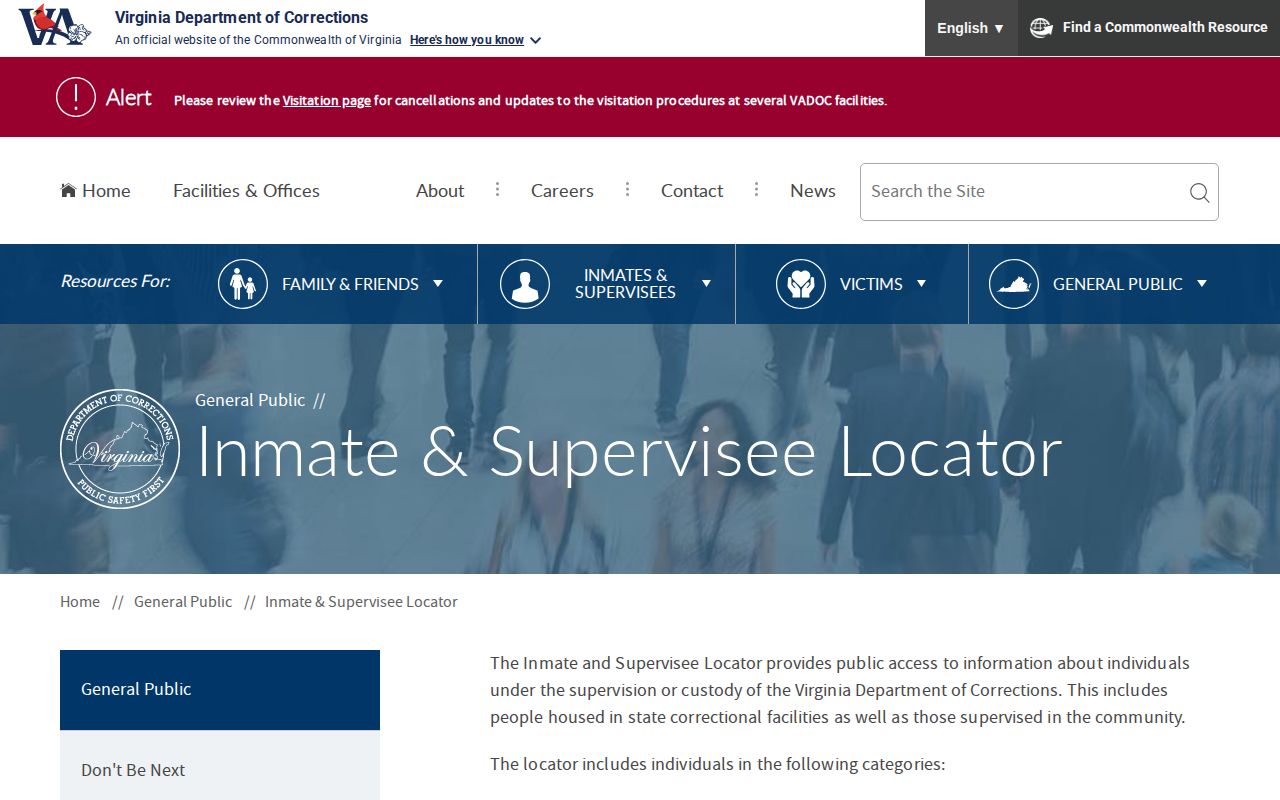
The form covers VADOC custody and supervision. It does not replace Lancaster County Jail records for a person whose entire case stayed local.
When the last custodian is not yet clear, follow the Lancaster County released-inmate search path before assuming the case belongs to VADOC. A local transfer-out entry naming VADOC is the clearest bridge from county custody into this system.
Where Virginia Corrections Releases Go
VADOC’s official facility-release information describes two principal exits from a state institution: discharge after satisfaction of the sentence and parole for an eligible prisoner after Board authorization. Either can place a person back in the community. Probation, parole, or post-release supervision may continue through a community corrections district even though physical incarceration has ended.
Lancaster is served by VADOC District 33 in Warsaw. A locator result naming a district or community supervision can therefore connect a former state prisoner to the local supervision route. It does not show that supervision ended, and it should not be read as a prison location.
VADOC District 33
471 Main Street
Warsaw, VA 22572
804-333-3286
Serves Lancaster and nearby counties for state community supervision.
Virginia Department of Corrections
P.O. Box 26963
Richmond, VA 23261
804-674-3000
Statewide locator and records routing
A release to a detainer or another custodian is not a community discharge. VADOC Operating Procedure 050.3 calls for review of warrants, detainers, continued-custody orders, disciplinary matters that affect the date, and uncalculated sentences before physical release. The destination and order control the interpretation.
Virginia Corrections Release Documents
The locator is a convenient public starting point, but the state release packet is stronger evidence. Depending on the case, day-of-release documents can include an Order of Release, Conditions of Probation, Conditions of Parole, a notification-of-release letter, identity verification, supervision instructions, and institutional-account handling. Signed and witnessed papers show implementation rather than a mere projection.
VADOC says state discharge and parole releases occur by 11:59 p.m. on the release date, weather permitting. That statement belongs only to VADOC facilities. It must not be applied to Lancaster County Jail or NNRJ, whose local release timing was not established by the research.
| Order of Release | Documents the state authority and completed release process. |
|---|---|
| Conditions of Parole or Probation | Shows obligations that begin or continue in the community. |
| Locator category and location | Provides a current public custody or supervision clue. |
| VACORIS or time-computation record | Explains the calculated date and final checks. |
| Court sentence | Supplies the judicial term and legal basis interpreted by corrections staff. |
Note: A Parole Board grant starts release planning and notices, but the certified decision date is not the institution’s physical exit timestamp.
Virginia Corrections Estimated Release Dates
For a current sentence, use the phrase Estimated Release Date. VADOC’s public materials distinguish a computed projection from the actual release event. The estimate can change because of added sentences, jail-credit adjustments, earned-credit classification, disciplinary loss or restoration, detainers, court amendments, or a correction to the calculation.
VADOC’s time-computation guidance divides sentence calculations by legal era and sentence type. Older Good Conduct Allowance rules generally apply to specified older felony and misdemeanor sentences. Earned Sentence Credit rules govern qualifying post-1995 felony terms, with different eligibility and rates. The common “85 percent” shorthand is not universal and cannot be applied to every prisoner.
Before discharge, records staff review the electronic and historical files for unresolved matters. That final review explains why a locator estimate should not be treated as an appointment or guaranteed departure time. Actual release should be confirmed with the signed state document and, where appropriate, the receiving supervision office.
VADOC Victim Services uses “advanced release” for an anticipated event, typically about thirty days ahead, and sends another notice if the date changes. It uses “release date” for the event when VADOC custody actually ends and notifications stop. Public locator users and eligible notification recipients follow different channels, so an alert should not be substituted for the public or official record.
Virginia Corrections Records and FOIA
VADOC directs records requests to the unit manager, warden or superintendent, or district chief responsible for the record. The statewide FOIA route is FOIA@vadoc.virginia.gov. Name the institution or District 33 when known, identify the person with a DOC number and narrow dates, and state which existing record is sought.
A focused request might ask for the release date, release authority, Order of Release, conditions document, destination or supervision district, and relevant time-computation entry. Requests for protected former-inmate material may require identity or authorization. Ask for segregable nonexempt fields if part of a file cannot be disclosed.
Do not send a state-prison release request to the Lancaster sheriff merely because the conviction arose in Lancaster. The sheriff can document the earlier local stay and transfer. VADOC documents the later state placement and release. Splitting the requests by custodian produces a coherent custody timeline.
When parole is involved, add the Virginia Parole Board’s monthly decision record, but keep its role narrow. A grant documents the Board’s decision. VADOC then implements release, checks outstanding custody barriers, prepares the signed conditions, and routes supervision. The decision date and physical release date can differ, which is why both records belong in the timeline.
For a fully discharged person, the public locator may no longer provide the same current detail because its stated scope centers on people in custody or supervision. A no-result after discharge is not a historical certificate. Use the retained VADOC release packet, the court sentence, and the responsible records channel for a past event.
Virginia Corrections Search Limits
A no-result search does not prove release. The spelling or DOC ID may be wrong, the update may lag, the person may have served only a local sentence outside VADOC’s scope, or a lawful restriction may affect visibility. Search again with verified identifiers and return to the last known custodian.
VINE also divides local-jail and state-prison notification paths. Jail VINE registration does not automatically follow a person into VADOC custody. Eligible victims use VADOC’s separate notification process, while the public uses the locator and agency records. A registry alert is a third system and applies only to people with a legal registration duty.
A Lancaster court case can show the sentence imposed, suspended time, and legal authority, yet it does not identify every later prison transfer or the moment of physical discharge. VADOC’s own files supply that operational history. District 33 can confirm the route for state supervision in Lancaster, subject to limits on personal details.
The correct conclusion should identify the system and time: the person remained in a VADOC institution, left prison under community supervision through District 33, or completed a documented state discharge. It should not merge local jail release, state prison release, and federal custody into one status.